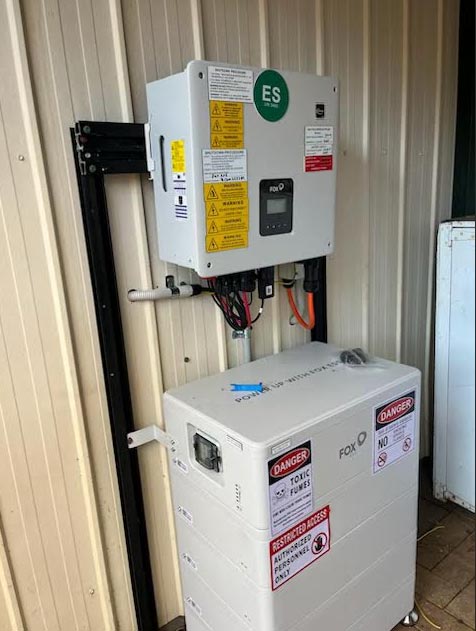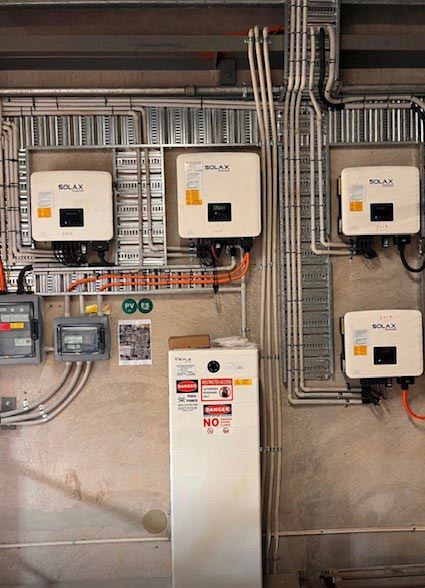
Solar systems fall into three broad types, and the right one depends as much on your postcode as your budget. Below is how on-grid, off-grid and hybrid systems compare in New South Wales and Western Australia, followed by the battery rebates and export rules that apply in each state.
1. The Three System Types
Use the toggle to switch between states — the fundamentals are the same, but the incentives and export limits differ.
On-Grid (Grid-Tied)
How it works
- Panels generate electricity, converted by inverter for household use
- Surplus exported to grid, may earn feed-in credits
Advantages
- Affordable & minimal maintenance
- Access to grid when solar is low
- Eligible for NSW rebates/feed-in tariffs
Limitations
- Does not operate during grid outage
- Possible export charges (e.g., 1.2c/kWh between 10am–3pm)
Off-Grid (Standalone)
How it works
- Independent of grid
- Solar charges battery bank, often with backup generator
Advantages
- Full energy self-sufficiency
- Ideal for rural/remote locations
- Immune to grid faults/outages
Limitations
- Higher installation cost (batteries/generator)
- Ongoing maintenance required
Hybrid
How it works
- Combines grid connection with battery storage
- Surplus stored for later use, grid used when needed
Advantages
- Grid security plus blackout backup
- Reduces peak-time electricity purchases
Limitations
- Higher upfront cost (batteries/inverters)
- Batteries require servicing/replacement
On-Grid (Grid-Tied)
How it works
- Panels generate electricity, converted by inverter
- Surplus may be exported to grid, may earn feed-in credits
Advantages
- Cost-effective & simple installation
- Continuous access to grid
- Eligible for WA solar incentives
Limitations
- Does not operate during grid outage
- Export limits may apply (e.g., Horizon Power regions)
Off-Grid (Standalone)
How it works
- Independent of grid
- Solar charges battery bank, often with backup generator
Advantages
- Full energy independence
- Immune to grid faults/outages
Limitations
- Higher installation cost (batteries/generator)
- Ongoing maintenance required
Hybrid
How it works
- Combines grid connection with battery storage
- Surplus stored for later use, grid used when needed
Advantages
- Grid security plus backup
- Maximises solar use
Limitations
- Higher upfront cost (batteries/inverters)
- Batteries require servicing/replacement
2. Choosing the Right System
Three questions decide it for most households.
NSW Inner-city/suburbs = on-grid or hybrid; rural = off-grid
WA Urban homes = on-grid or hybrid; remote = off-grid
NSW On-grid = affordable entry; hybrid = balance cost/resilience; off-grid = higher upfront but full independence
WA On-grid = affordable; hybrid = balance cost/resilience; off-grid = higher upfront but full independence
Off-grid = full self-reliance; hybrid = partial independence; on-grid = reliant on utility
3. Battery Rebates & Rules: NSW & WA (2025)
Battery incentives and export rules vary between states. Here's a clear side-by-side comparison so you can see what applies to your home.
New South Wales (NSW)
- Regulators
- Ausgrid, Endeavour Energy, Essential Energy
- Incentives
- Federal Cheaper Home Batteries program plus NSW Virtual Power Plant (VPP) offers
- Export Rules
- Commonly 5 kW per phase, with new Dynamic Operating Envelopes (DOE) and Emergency Backstop controls being introduced
- Best For
- Suburban households looking to add batteries for bill savings and potential VPP income
- Batteries
- Optional for on-grid systems, recommended for hybrid setups, and essential for off-grid
Western Australia (WA)
- Regulators
- Western Power (South West Interconnected System) and Horizon Power (regional and remote areas)
- Incentives
- WA Battery Scheme – up to $7,500 rebate plus a $10,000 no-interest loan (VPP participation required)
- Export Rules
- Strict limits apply; in many cases exports are capped at 1.5 kW unless connected to a VPP
- Best For
- Perth and regional households making use of rebates; fully off-grid systems in Horizon Power zones
- Batteries
- Optional for on-grid, strongly supported for hybrid systems, and essential for off-grid
4. Applies in Both NSW & WA
- Must use Clean Energy Council (CEC) approved batteries and accredited installers
- Must comply with AS/NZS 4777.1:2024 inverter and DER standards
- Important to check warranties, fire-safe siting, and recycling or disposal programs
Ready to maximise your solar savings?
See how the right battery setup can reduce your bills and future-proof your home.